Showing posts with label Reviews. Show all posts

Sunday, March 15, 2009

Chocolate? No thanks. But I'll take the Chocolate Box

First, happy birthday Kim.

Over the last several years, my neighbors, my wife and I have begun the tradition of celebrating birthdays with a nice dinner out.

Max's Alley, a locally-owned restaurant in Concord with an amazing wine menu has been the spot-du-jour on several occasions. I always enjoy eating there because the wine is always a treat.

Tonight was no different (and perhaps even more enjoyable because we lucked up on half price bottle night).

We started with a 2008 Chocolate Box Sauvignon Blanc. The discounted price was $15 a bottle. Special attention is paid in the wine-making process to ensure the sweet flavors of the grapes are preserved. The wine presents a full bouquet of lemon, gooseberry and grapefruit with a hint of asparagus. The palate is rich and creamy, with a smooth, crisp finish that pairs well with chicken and light pasta dishes.

For the red drinkers at the table, myself included, a bottle of 2006 Stags Leap Merlot (about $35) provided a great accompaniment to dinner, which for me was steak. The Nappa Valley merlot is complex, with notes of cherry, pomegranate, plum and strawberry, and hints of vanilla, white pepper and cinnamon. Fifteen months in French oak bring out the depth of the wine, which is certainly my merlot of the year to this point.

Wednesday, March 11, 2009

Black Swan bargain


Continuing on the theme of reds (but moving away from Malbecs, as promised), I bring you another Cabernet Sauvignon. And in the interest of a slumping economy, it's a cheap (read REALLY CHEAP) Cab.

I picked up a bottle of 2008 Black Swan Cabernet Sauvignon at Harris Teeter on sale for 2/$10. I figured, what's a $5 gamble on a young wine?

As it turns out, it was a good gamble. Because it's a 2008 vintage, it hasn't had time to really mature. If you're hesitant about reds, or just venturing into wines, it's a get place to start (and, if you don't like it, you're only out about the cost of a pint of beer out on the town).

The Black Swan hasn't fully matured, and as such is light on the palette. But hints of raspberry and chocolate give it great flavor. What sets this wine apart -- and will continue to do so, I would imagine, as it ages -- is the hint of eucalyptus this Australian wine offers as it finishes smooth.

Might I suggest buying a couple of bottles and keeping at least one of the shelf for a few years while it continues to mature. Doing so will only deepen and bring out more subtle hints of flavor.

Monday, March 9, 2009

Worth the wait

Sorry for the long delay in posting. My computer died about two weeks ago, and I've been suffering from blogger's withdrawl ever since.

In the meantime, I spent an amazing week in Belize. While there, I admittedly took a break from wines and enjoyed the local beer (Belikin) and the Belizan rum, both of which come highly recommended. One Barrell rum is up for a worldwine rum of the year award.

My one wine during the week, however, was a winner. It was a 2005 Trivento Golden Reserva Malbec. Yes, another Malbec. I'll work on tasting some other varieties soon enough, I promise. But in the meantime, if you can get your hands on this wine, do so.

From 100 - 120-year-old vineyards, this Argentinian wine's grapes are hand-harvested and cold macerated for two days to bring out the grapes' sweetness. Lots of huge, minty, very eucalypt and menthol character. All new French oak gives a charry quality. Sweet, creamy, black berry and plum fruit, with lots of glossy cherry and a real bite of tannin, but it is supple and fine, with a nice freshening acidity.

Sunday, February 22, 2009

Per your request


At the request of a friend who was looking for a good deal on a good Cabernet Sauvignon, I began a quest to taste a few sub-$10 wines and offer my take on the best.

Meridian 2005 Cabernet Sauvignon Reserve took the cake. It's a medium-bodied wine with great balance and a full flavor. Hints of blackberry, currant and vanilla give way to a smooth, subtle finish that makes this a sure-fire hit with even the more refined palates. Aged for nearly eight months in oak, the wine's tannins give it great balance and texture.

Meridian wines are another product of the Central Coast in California, an area known for producing award-winning wines years after year because of the unique climate that allows the area's grapes to mature more slowly, capturing full flavors and developing unique characteristics that create equally unique wines.

Wednesday, February 18, 2009

Tres Pinos

After a long day of work, I decided to open a white that had been chilling in my fridge for several weeks. The Tres Pinos 2007 Paso Robles Tierra Blanca was a welcome delight.

It's a blend of Gewuztraminer, Chardonnay, Viognier and Muscat Canelli, and perhaps one of the most well-balanced wines I've tasted in a while. At this point, this is my top pick of 2009 for under $10.

Tres Pinos is a product of California's Central Coast, a features a bouquet of citrus fruit and wildflowers. It's a medium bodied wine with a smooth finish that pairs well with pastas, vegetables and chicken.

Sunday, February 15, 2009

Really big (really good) rooster


Home for a long weekend that promises to produce future blogs (picked up two new wines that I'll review somewhere down the line, once I find the occasion to enjoy them), but wanted to update with two quick notes.

First, if you're in or around Durham, N.C., check out Brandywine Cellars across from Southpoint Mall. www.brandywinecellars.com

The owner is a 30-something wine lover, and the shop is an upscale, classy little niche shop with great variety and great wine tastings. I picked up a Malbec that I'm looking forward to sharing more about in the future.

Then I headed back to Burlington for a nice Valentine's Day dinner with my wife. Among the highlights was a 2007 Giant 47 Pound Rooster Pinot Grigio by Rex Goliath. This light, crisp Pinot offers a mouthful of citrus undertones, with a light, smooth finish. For about $10, it's a nice offering to pear with pork, chicken or light pastas.

HRM ("His Royal Majesty") Rex Goliath is based out of Gonzalez, Calif., and gets the 47 pound rooster name from a a famous rooster (named His Royal Majesty) that traveled with a Texas circus. None of the HRM Rex Goliath wines are more than $10.

Tuesday, February 10, 2009

No Monkey business


New Zealand's 2007 Monkey Bay Sauvignon Blanc scored 87 pts. by Wine Spectator magazine. Not too shabby for a sub-$10 bottle of wine. This light-bodied white is defined by hints of lemon and grapefruit as well as gooseberry and grassy notes, with a dry, but quick finish.

It would pair best with seafood or other light offerings.

It's certainly not my favorite Sauvignon Blanc, but it's on the short list, if for no other reason than there's a monkey on the label.

Sunday, February 8, 2009

Warm weather riesling


Just a quick post on a very nice wine my neighbor shared with me this weekend. And what a pairing the wine and weekend made.

The 2007 Moselland Lighthouse Series Riesling ($10) is as attractive as it is tasty. The frosted bottle holds a medium bodied, crisp wine that's full of fruit flavors. Served well-chilled (optimum temperature is slightly warmer than refrigerator temperature), it's a great sipping wine when enjoying unseasonably warm winter weather.

The wine is tagged as a Qualitatswein wine. Qualitatswein is a term used for late-harvest wines from one of 13 regions of Germany. Late-harvest grapes are overly ripe, therefore producing intensely sweet wines that often define the Riesling variety.

Saturday, January 31, 2009

Entertaining evening

The downside to entertaining is all the leg work that goes into getting ready for guests.

The upside is the host/hostess gifts -- especially when that gift is wine.

My wife and I hosted two other couples from church for a nice, leisurely dinner. The wine flowed, and it was good.

We started with a Baron Herzog 2005 Central Coast Cabernet Sauvignon ($13, Trader Joe's). This medium bodied Cab Sav was smooth, with a bouquet most defined by blackberry that paired nicely with cheese appetizers. Bottled along California's central coast, the wine is lightly filtered, meaning some sediment might find its way into the bottle. The upside, the wine will continue to mature with age.

Next we opened another Trader Joe's Cab Sav from California. The 2006 Bear's Lair was slightly more tannic (read "pucker power") with more oakey tones. The fruit flavors of this more full-bodied wine ($8-$10) hints a blueberry, blackberry, cherry and plum. It was a great match with the pork tenderloin dinner course, and at the price, would be a great gift offering. It makes more than a $10 impression!

Finally, we opened a 2006 Chianti from Melini, a noted Tuscan winemaker since the early 18th century. Certainly the most full-bodied of the night's three wines, this wine exemplifies the Chianti variety, with a peppery bouquet and a smooth, soft finish. Highly recommended for those who prefer a hearty wine.

In all, it was a great evening and a great chance to expand my wine selection.

Wednesday, January 28, 2009

Less than impressed

It was bound to happen, eventually, I guess. A wine that made the wrong list, in my mind.

I came home, no real plans other than basketball and a glass of wine. I reached into the wine rack and pulled out "Gold Rush Red".

I know little more about the wine than what the label offers (which isn't much), and, honestly bought it because of it's label. Odd though it seems -- although prophetic in retrospect -- I wasn't impressed with the label. Simple in design. Very basic. Almost cartoonish. "But, hey," I thought, "why not give it a try. A bad label doesn't make for a bad wine."

Or does it.

As my wife said, "It tastes cheap." Mild oak flavor, but no real "umphh". If you're looking to impress and don't know much about wine, may I suggest giving labels the attention they deserve. If it doesn't work out, at least you've got a nice bottle to look at.

Friday, January 23, 2009

Dessert wines

At the request of a friend, here are a few suggests for wine pairings with dessert.

When pairing wines, it's important to find a wine that matches the general characteristics of the food. Red wines are typically more full-bodied than whites, thus pair better with red meats and more hearty dishes. The more spice and flavor in a dish, the more bouquet and oak well-matched wines would typically have. Of course, this is all subjective. Wine is a personal experience, and can be enjoyed with any combination of food.

Personally, here are a few suggestions for sweet wines that I enjoy with sweet desserts:

Frosty Dog
- Made from frozen Vidal Blanc grapes (the cold temperature brings out the sweetness) at southern Virginia's Chateau Morrisette (www.chateaumorrisette.com), Frosty Dog features a light taste of apple, pear, honey and spice. Frosty Dog was the winner of the 2004 and 2006 Virginia Governor's Wine Competition. If you're in the area, the winery makes a great day trip, offering wine tastings, tours and a restaurant serving lunch and dinner.

Dezzani sweet wines
For something a little different, may I suggest Dezzani Sweet Red and Sweet White. I first tasted these two wines at a free Harris Teeter tasting (I promise they're not paying me royalties. That just where I shop. There and Trader Joes. Good selection and good prices.) These two wines are an interesting study because they are half wine and half champagne, giving them a bit of the bubbly appeal, with a sweet taste to boot. The sweet red was my favorite of the two, but is admittedly quite sweet.
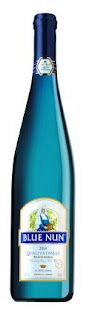
Blue Nun ($9 at Harris Teeter)
The 2006 Blue Nun Qualitatswein is a crisp Rheinhessen. As the name would suggest (especially if I knew how to add all the special characters), Blue Nun comes from Germany -- more specifically, a region along the River Rhine that has produced wines since Roman times. Blue Nun, one of the most well-known Rheinhessens, however, has only been producing wine since the early 1920s. This semi-sweet wine is crisp, with most notable hints of peach. It would serve as a good dessert pairing for those who are less fond of sweet wines. Also pairs nicely with salads and fish.

Then there are ports
I'm a big fan of port wines, but it would be terribly difficult to pick just one to highlight. The best description of Ports, is summed up on wine.LoveToKnow.com like this:

Port is very popular, and has been around for a long time. Get a pen and pencil and write this down, OK? 1)Port is fortified. 2)Late harvest wines are not. Ta da! What does that mean? Port is a low-alcohol, sweet wine that has a spirit of some sort (usually brandy) added to fortify it—meaning it adds alcohol. Late harvest wines do not have this process done. So port has a higher alcohol content than most dessert wines (usually 18-19 percent). Port can be made—like late harvest—from any grape, but historically the true ports we drink come from Spain and Portugal from grape varieties there. Shipped into England by English companies gave these wines English names: Smith-Woodhouse, Wares, Cockburns, etc. These guys can age a long time and cost a pretty penny, but I’ve had ports from the 1800s that have been delicious! The nice thing about opening a port is that you do not have to consume it like you do wine…it’s fortified, thus it will last a lot longer after being opened.

Types of Port
Now there are mainly two types of port: Tawny and Ruby. Tawny port is done in what they call a solera process, which means that the wine evaporates in the barrel and oxidizes. This process gives the wine a golden/brown color and adds a “nutty” characteristic. Ruby Port is the cheapest and most extensively produced type of port. After fermentation it is aged for three years inside large oak vats to prevent excessive oxidation, preserving the rich red color and bright, fruity flavors.

Couldn't have said it better myself.

If anyone has suggestions of their own, I certainly welcome those.

Monday, January 19, 2009

Argentina's finest

Malbec.

For the occasional wine drinker, it's certainly not as commonly known as Merlot, or as well represented on wine lists as Chardonnay, but in many aspects, this up-and-coming varietal is as diverse as either.

Also known as Cot, Malbec is used sparingly in the French Bordeaux region, where it is, in small quantities, blended with other varietals. Increasingly, however, this thin-skinned grape is making a name for itself based on the successes of Argentinian vinters. The grapes require more heat and sun to mature than more common wines like Merlot, making the varied terrain of Argentina a great climate.

I found one of the more commonly distributed Malbecs at Harris Teeter. It is a 2006 Diseno from the Mendoza region ($12). Set against the Andes range, Mendoza produces some of Argentina's top Malbec grapes. Because Argentina is still fairly new to the global wine scene, good Malbecs are still difficult to find, and the best are rather pricey because of their limited quantities (though Wine Spectator did name Bodega Colome ($25) one of its top 100 wines of 2008, scoring 92 pts).

Diseno was good, but really didn't wow me. I'm not sure it's matured long enough to reach its full potential. I'll likely pick up another bottle and shelve it for a few years to really bring out the fruit (blueberry and cherry blossom) and the tobacco flavors.

In the meantime, it would serve well folks who aren't particularly fond of heavy red wines. It's fairly light, in comparison, and would pair well with lighter portions of red meat dishes or heavy pastas.